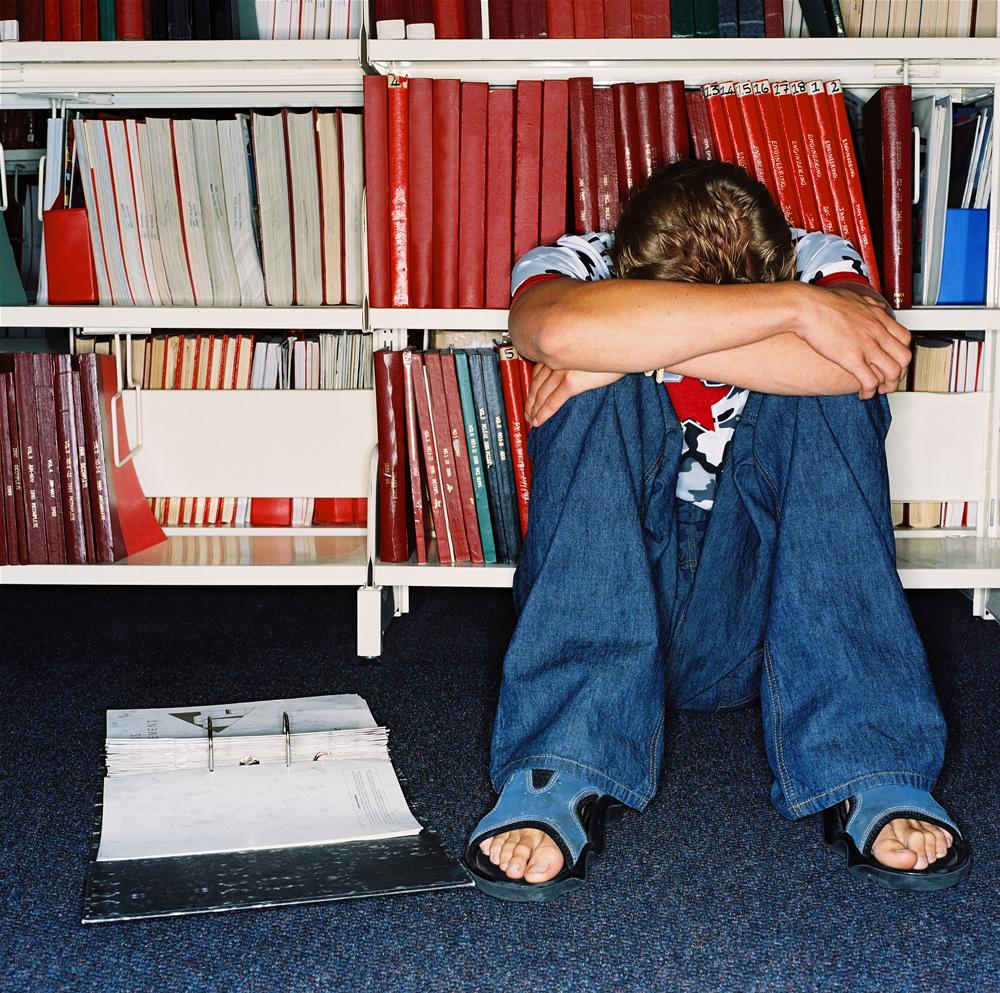
There are 1.6 million children living in severe poverty in this country. According to Save the Children, there are 29 local authorities across the UK where more than one in five children are living in households with half the average income – for a family of four this would be pay of less than £12,500 – £34 a day to meet all essential needs. In Tower Hamlets and Manchester, the figure is 27%. 14% of children in Wales and 13% in England are living in these conditions.
In an interview with the BBC, Sally Copley, Save the Children's Head of UK policy, explained the level of 'material deprivation':
"Children up and down the country are going to sleep at night in homes with no heating, without eating a proper meal and without proper school uniforms to put on in the morning."
According to a report by Save the Children in 2008, two-thirds of these households have to borrow money to meet utility bills, 1.3 million can't afford new clothes for their children, half of the households cannot afford to provide three meals a day for their children and a million children live in houses with rotting walls or floors.
 A report last year, An Anatomy of Economic Inequality in the UK by Professor John Hills of the London School of Economics, commissioned by the Labour government, concluded that being born into a disadvantaged social class had a profound, lifelong negative impact. These inequalities accumulate over the life cycle, the report concludes. Social class has a big impact on children's school readiness at the age of three, but continues to drag children back through school and beyond. With few exceptions, the children born into poverty will get fewer qualifications, lower paid jobs, suffer more health problems and die younger than their peers.
 In 1999 Tony Blair made a commitment to end child poverty in the UK by 2020. By 2008 Labour had pulled 600,000 children out of poverty thanks to tax credits and other initiatives. Yet, despite the Government's efforts, the UK still has one of the worst records on child poverty in the EU. We are the 6th biggest economy in the world and yet we rank 21st out of 27th in Europe on this crucial indicator.
 |
Meanwhile, the UK's present inequality in wealth distribution, the gap between rich and poor, is at its widest point since the 1920s. Professor Hills, indicated that the richest 10% of the UK's population was over 100 times richer than the poorest 10%. Researchers analysed the total wealth accrued by households over a lifetime. The top 10%, led by higher professionals, had amassed wealth of £2.2m, including property and pension assets, by the time they drew close to retirement (aged 55-64), while the bottom 10% of households, led by routine manual workers, had amassed less than £8,000.
In this context, the Coalition has proposed switching the focus on tackling child poverty from traditional anti-poverty measures, based on income, to improving children's life chances. However, with the material deprivation described in the report it is not hard to understand why Save the Children are adamant that income plays such a crucial role. They have called on George Osborne to announce an emergency plan to create new jobs in the poorest areas and increase financial support for low-income families. This, of course, is unlikely to happen. The Coalition have replaced Labour's pledge to 'eradicate' with proposals to 'tackle' child poverty and Osborne has promised that cutting the deficit would not increase child poverty.
In the light of rising unemployment, rising inflation, welfare cuts and the VAT increase, it would appear to be the sort of promise Sir Humphrey in Yes Minister might have described as 'courageous'. I can think of other words. Save the Children calls it a 'national disgrace.'
I think they are right.